
Former Sex Trafficking Victim Says New Jersey Bill Undermines Law Enforcement and Empowers Criminals
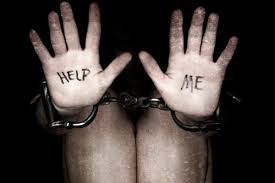
Former Sex Trafficking Victim Says New Jersey Bill A5907 Undermines Law Enforcement and Empowers Criminals
By Marie Tasy, Executive Director, New Jersey Right to Life
December 19, 2025
Last week, I was one of several people who testified a second time before the New Jersey Assembly in opposition to NJ Bill A5907. The bill would limit how automated license plate reader data may be shared in interstate investigations related to abortion services.
The bill creates an unprecedented and politically driven exception in New Jersey law by requiring written declarations from other states before data can be shared. This bill creates real risks to public safety and to some of the most vulnerable people in our state—women and children who are victims of trafficking and abuse, as well as others who depend on effective law enforcement for protection.
Despite serious concerns raised during testimony at this hearing and the earlier December 4th hearing, A5907 was released from committee along party lines, with every Republican voting no and every Democrat voting to advance it.
The bill is being fast-tracked and is scheduled for a full Assembly vote on Monday, December 22, 2025, while no Senate vote has been scheduled. This rushed timeline makes it imperative for lawmakers and the public to fully understand what this legislation does, and what it fails to do.
New Jersey law has never singled out one issue for this kind of special treatment. No other area of law enforcement is carved out and handled differently in this way.
As written, the bill is short-sighted and ambiguous, reflecting political motivations rather than a serious effort to protect public safety, as demonstrated by Planned Parenthood’s testimony in support of the bill.
It would hamper law enforcement, expose officers and agencies to penalties for doing their jobs in good faith, and increase administrative and compliance costs—exactly the concerns raised by a law enforcement representative who testified in opposition to the bill on December 4.
Although the bill includes a fiscal note, it provides no estimated cost, leaving taxpayers in the dark about the financial burden this mandate will impose.
What stayed with me most from the hearing, however, was the testimony of Jean Marie Davis. A link to her testimony can be found below.
Ms. Davis traveled from Vermont to testify. She is a survivor of sex trafficking, and she spoke honestly about her experiences. She also testified that she later became a sex trafficker herself. Her testimony offered rare and unsettling insight into how traffickers think, how victims are moved, and how weaknesses in the system are exploited.
She told the committee that she was trafficked repeatedly from out of state into New Jersey, often transported in vehicles with out-of-state license plates, and named the places where it occurred, including New Brunswick, Newark, Atlantic City, and Willingboro.
These are real communities where women and children were exploited while traffickers relied on mobility and anonymity to avoid detection.
Ms. Davis explained that identifying patterns—vehicles, routes, and repeated movements—is essential to uncovering trafficking networks. License plate reader data plays an important role in that work. Weakening access to that information does not protect victims; it protects those who harm them.
She also cited statistics showing the number of reported rapes in some of the very legislative districts represented on the committee. Her point was direct and hard to ignore: these crimes are happening now, in our communities and in the communities of the lawmakers voting on this bill.
Her testimony visibly shook several Democratic members of the committee, but despite what they had just heard, they followed party instructions and voted to release the bill.
I am grateful for the strong and principled remarks offered by Assemblyman Robert Auth (R-39) and Assemblyman Jay Webber (R-26), who listened carefully to the testimony, raised serious public safety concerns, and directly asked the representative from Planned Parenthood to provide proof to support its claims—which she failed to do.
The bill contains no clear exception for criminal investigations, creating a loophole that can be exploited. Bad actors could claim a connection to reproductive health care to avoid scrutiny, while law enforcement officers are left hesitant and exposed to penalties. In cases involving trafficking and sexual violence, any hesitation could cost time—and time can cost lives.
This bill does not protect women or children. It creates dangerous confusion, limits lawful investigations, and represents a serious failure of legislative judgment.
These elected officials have been warned by law enforcement, by survivors, and by the testimony presented before them, and choosing to proceed anyway makes the harm that much greater and holds them accountable for the predictable harm and suffering of those who will be further victimized by this law.
Testimony Videos:
Below is a link to Jean Marie Davis’s 12/18/25 testimony
Jean Marie Davis Testimony AAP 12/18/25.mov – Google Drive
Below is a link to my 12/18/25 testimony
Marie Tasy Testimony AAP 12/18/25.mov – Google Drive