
The Lessons from Baby Clementine’s Case. Why New Jersey Should
Reject A2218/S2260 and Preserve Accountability
The parents of Baby Clementine are still searching for answers.
Their questions center on a late-term abortion performed at Cherry Hill Women’s Center. On its webpage, it tells us “CHWC is proudly the only Ambulatory Surgical Center (ASC) in New Jersey that provides expert advanced gestation abortion care for 28 weeks.”
According to reports and allegations presented in a recent documentary video, Baby Clementine’s Mother was approximately 20 weeks pregnant when she experienced a severe emotional crisis and contacted Cherry Hill Women’s Center seeking medical guidance and assistance. “Like, I was literally just calling to ask questions,” she says. “I don’t know what I was looking for. Not that. Literally had no idea what abortion was…Nobody ever explained anything to me either. I didn’t know what procedures entailed. I didn’t even know if it was legal.”
Despite lacking insurance coverage and financial resources, she said she was encouraged by the center’s call service to come to the facility for an abortion that would be funded through the National Abortion Federation.
The documentary further reveals that Clementine’s mother was under the influence of legal marijuana when she arrived at the clinic, a circumstance that medical experts interviewed for the film said should have raised significant concerns regarding her ability to provide informed consent.
She underwent an excruciating two-day abortion procedure that former abortion providers interviewed in the film describe as barbaric. The documentary further alleges that a review of the medical records raises serious questions about whether Clementine was born alive following the administration of labor-inducing drugs and then trafficked for fetal organ harvesting.
According to public reports , federal complaints have been filed with the U.S. Department of Justice and the U.S. Department of Health and Human Services Office for Civil Rights seeking an investigation into the circumstances surrounding Clementine’s case.
Those allegations deserve a fair and thorough investigation.
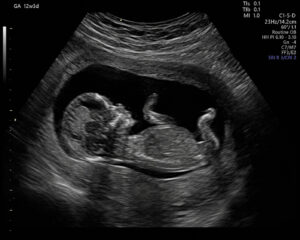
At a minimum, allegations that a fully formed 20-week child with a beating heart may have been born alive and subjected to organ harvesting should be enough to convince lawmakers not to make accountability more difficult.
Yet that is precisely what Democratic legislators in New Jersey are attempting to do.
At the very moment serious questions are being raised about accountability within the abortion industry, they are advancing A2218/S2260, the state’s latest abortion shield bill.
The sponsors insist the legislation is necessary to protect so-called “reproductive health care providers.” Yet throughout months of legislative hearings, supporters could not identify specific incidents in New Jersey that would justify these sweeping new protections and penalties.
Violence is already illegal. Threats are already illegal. Harassment is already illegal. Trespass is already illegal. Obstruction is already illegal.
We have seen what happens when abortion providers operate without meaningful oversight.
Infamous late-term abortionist Steven Chase Brigham ran an illegal interstate abortion operation spanning New Jersey and Maryland. Women began abortion procedures in one state and completed them in another. Authorities eventually discovered the bodies of dozens of late-term aborted babies stored in a freezer. Yet jurisdictional complications and regulatory failures prevented meaningful accountability.
The nation witnessed a similar scandal in neighboring Pennsylvania, where abortion provider Kermit Gosnell operated what became known as a “House of Horrors” for years while regulators failed to act. As a Pennsylvania grand jury later concluded, state officials stopped inspecting abortion clinics “for political reasons,” believing that inspections would be “putting a barrier up to women” seeking abortions.
Repeated warnings went unheeded. At least two women lost their lives under horrific circumstances. Investigators ultimately uncovered evidence that infants born alive during abortion procedures were subsequently killed by depraved and inhumane methods. Gosnell would “snip” their spinal cords.
Without revisiting the many other problems I have addressed previously, A2218/S2260 limits cooperation with certain out-of-state investigations and proceedings involving “reproductive health care” activities. It affords special protections to abortion providers and places reproductive health care activity beyond forms of professional, legal, and insurance accountability that generally apply across medical practice.
Questions surrounding Baby Clementine’s death and Cherry Hill Women’s Center’s practices are emerging at the same time state regulators have cited the clinic for serious deficiencies in patient care and infection control practices. According to inspection findings released by the New Jersey Department of Health on April 30, the facility was cited for systemic failures that created significant risks to patient safety.
These developments reinforce a simple but important truth: when serious questions are raised about the conduct of medical providers, the answer is greater transparency, stronger oversight, and meaningful accountability.
Those are the lessons of Baby Clementine’s death. A2218/S2260 points New Jersey in the opposite direction and should be rejected.